As autumn approaches, there is a desire to try a new experience and break free from your routine. Research shows global market trends where more and more people are seeking new experiences each year with many different opportunties to reconnect and rediscover your inner wanderer. How can we develop our adventurous side? Sometimes it takes courage to step outside your comfort zone. It is not always straightforward to travel and book 2-3 weeks off, so why not try to incorporate small adventures into your every day life, this could be walking or driving a new route, visit a new place to eat or meet up with friends, attend a talk, read a different book, learn a new skill or activity like a walking group or join a shorter weekend break. Sarah is organising a short adventure trip to the Isle of Iona, Scotland from 18-20th October 2025, with inspiring talks, invigorating Pilates and scenic walks, this short break offers an idyllic location for a quick escape. Part of the journey is the adventure of getting to the destination and there are ample opportunities to explore neighbouring islands such as Mull.
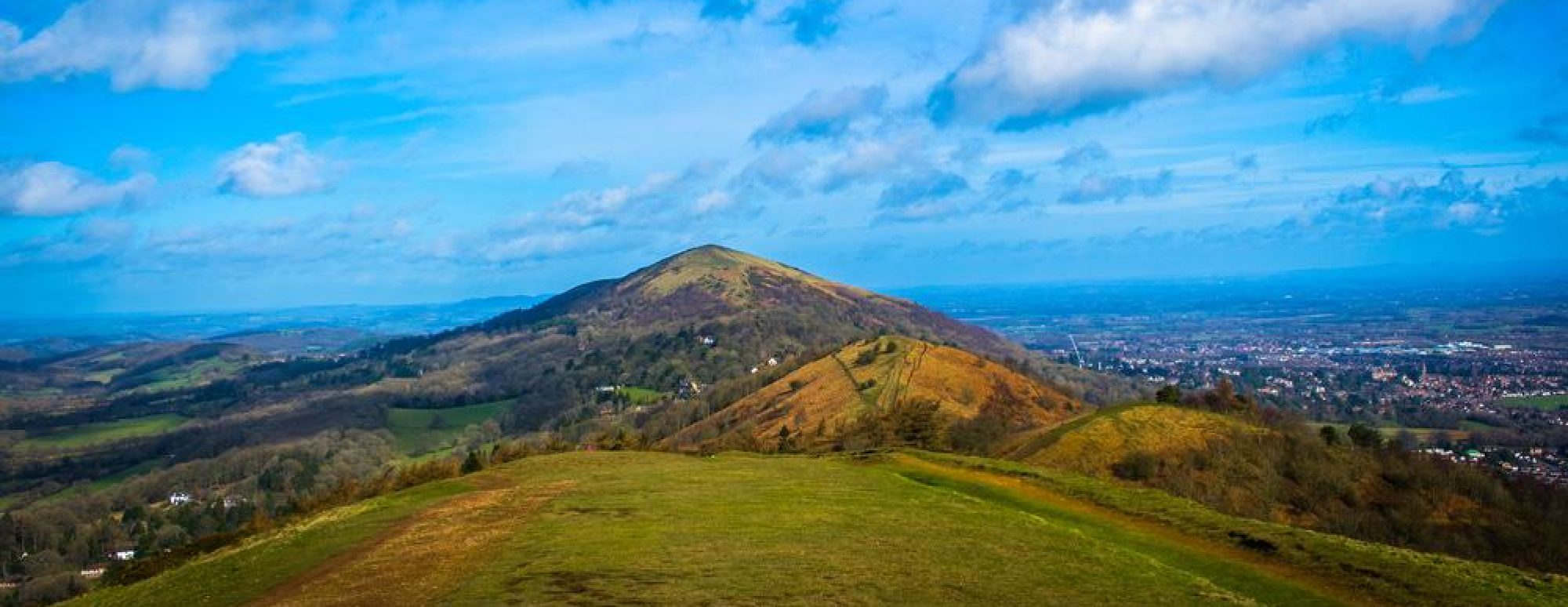
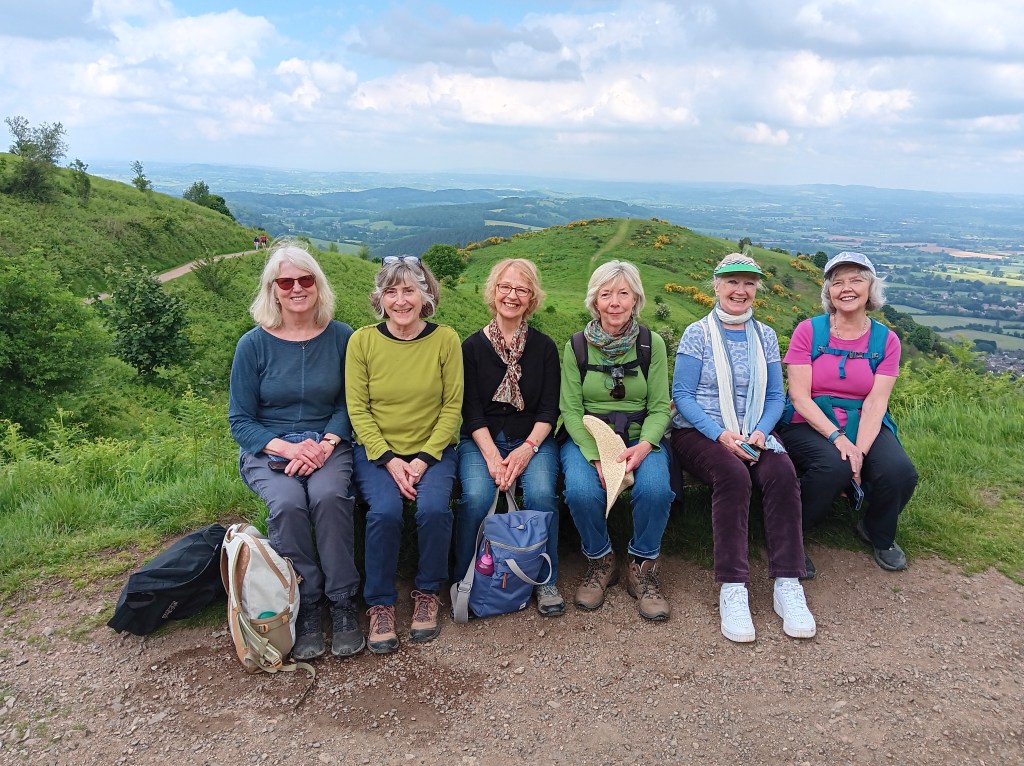
Walking with clients is more than just exercise; it’s a shared journey towards better health, deeper connections, and enhanced well-being. The fitness day was carefully designed which offered a blend of physical activity, mental relaxation, Pilates and social interaction. Our scenic picturesque path started with a steady 6 mile walk on the Malvern Hills, our mindful walk led to discussions on the landscape and local flora. Walking side by side fosters relaxation and engaging conversations.
The small group enables a shared experience which promotes a sense of community and mutual encouragement, whilst shared goals fosters camaraderie and a sense of accomplishment.
After the walk the group participated into a rejuvenating Pilates session of exercises designed to enhance their strength, flexibility, and overall well-being, with an emphasis on mind-body connection, ensuring participants finished the day feeling balanced and energized. This carefully curated day combines the physical benefits of walking and Pilates with the mental benefits of mindfulness and social interaction, ensuring a comprehensive wellness experience for all participants.
The Via Francigena, also known as the Camino to Rome, is an ancient walking trail that takes pilgrims on an epic journey, The route can be split into sections. Part of my route starts in the hilltop town of San Miniato, famous for its artistic, cultural, and historical sights, and finishes in the UNESCO World Heritage historic centre of Siena.
As you stroll through the unforgettable Tuscan countryside you gain an insight into the unique history of the region’s Via Francigena, flora and fauna, and each Tuscan town that you pass through. This section of the Via Francigena, is in the heart of Tuscany, as you walk across beautiful rolling hills and woodland, stopping in gorgeous villages where you will enjoy a well-deserved rest. There are many beautiful sights on this section to see, including the tiny walled hilltop town of Monteriggioni and two impressive UNESCO World Heritage Sites: the breathtaking town of San Gimignano with its medieval towers and magnificent Siena.
Undertaking any pilgrim route requires resilience, my first day of walking 17 miles in intense heat was a real test for physical endurance, but wearing the right gear is essential as well as having a good mind set. Mental resilience, Pilgrimage offers time for mindfulness and reflection which can help you keep focused on your journey. Emotional resilience is being able to adapt and change according to the weather or change in plan, connecting with other pilgrims, sharing experience, emotional support and camaraderie can help you stay strong. There are times when it can get challenging but finding the perserverance to push through when feeling tired or discouraged can help you continue on the path.
Both walking and Pilates are low impact activities which reap many health benefits to include improve balance, co-ordination, deep muscular activation, posture and mindfulness.
Walking address the cardiorespiratory fitness and resistance training from Pilates addresses improved muscular strength, studies undertaken by Takeshima, et al (2013) have demonstrated that the combined programs, either undertaking both activities on the same day or alternate dayes, walking one day and strength training the following day has significant improvements in endurance, functional strength, agility, flexibility, serum lipids and blood pressure over a 12 week period.
In regard to coronary heart disease, Maestroni et al (2020) found that progressive resistance training provides an improvement in cardiorespiratory function comparable to aerobic training alone, when combined they offer more substantiated improvements in both fitness and strength as well as systolic and diastolic blood pressure which may be significantly lowered by resistance training.
Those suffering from anxiety also benefit. In Australian studies on women in their 50’s and 60’s, Ripton (2015) state that women with depression who walked 200 miles a week had more energy and those with anxiety may benefit as cortisol, a hormone that provokes a stress response is lower in those who walk compared to those who are sedentary.
Both walking and Pilates can also be challenged by adding nordic poles for walking to increase the instensity of the walk which can burn more calories, poles also encourage you to stand tall, tighten the abdominals, act as an aid for balance, whilst resistance bands, tubing, circles can be incorporated into Pilates programs to increase strength and intensity.
References
Maestroni, L. Read, P. Bishop, C., Papadopoulos, K., Suchomel, T. J. Comfort, P. & Turner, A. (2020). The benefits of strength training on musculoskeletal system health: Practical applications for interdisciplinary care. Sports Medicine, 50(8), 1431-1450. doi:https://doi.org/10.1007/s40279-020-01309-5
Ripton, N. (2015) The surprising health benefits of walking
Takeshima, N, Islam MM, Rogers, ME, Rogers, N.L. Sengoku, N, Koizumi, D, Kitabayashi, Y, Imai, A, Naruse, A. (2013) Effects of nordic walking compared to conventional walking and band-based resistance exercise on fitness in older adults. J Sports Sci Med, Sep 1:12 (3): 422-30.
There are numerous studies and research on the many physical benefits of exercise to include aerobic exercise, muscular strength and endurance, flexibility and balance, however, there is increasing evidence to list the psychological and cognitive benefits and its relation to physical exercise, some of these include; heightened mood state, less anxiety, stress and depression, improved self esteem and body image. Studies conducted in Finland on participants between the ages of 24-64 explored the association between physical exercise and psychological traits and demonstrated that participants who exercise at least 2-3 times a week experienced less anger, distrust, depression and report a stronger sense of social integration compared to those who lead sedentary lifestyles.
I am preparing for a summer Camino, Portugual to Santiago. This Camino is recommended as the next Pilgrim route to take for those who have some experience of the Camino Frances and it is growing every year in popularity. Apparently the route was popular in the middle ages resulting in many walkers from across Europe undertaking the challenge. This South to north Camino will involve some coastal walking, making it ideal for walking enthusiasts looking for a sense of adventure, whilst visiting interesting towns and villages, trying local cuisine and wine. Some Portuguese words would be useful I am told to integrate with the community.
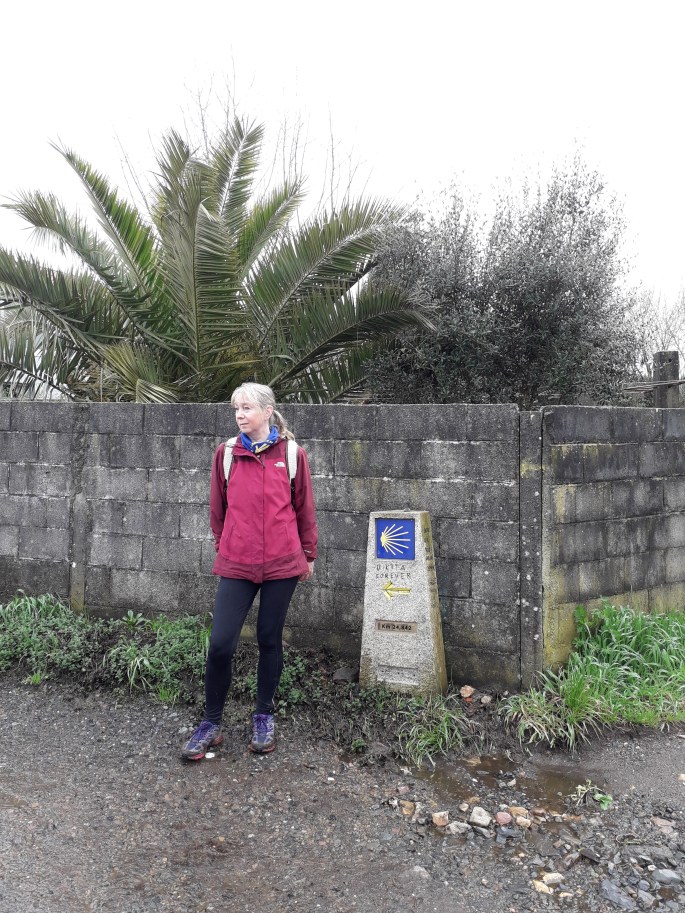
The route continued to Palas De Rei. After leaving Portomarin, crossing the River Mino we continued uphill steadily through woodland, the rain continued and got heavier and heavier. Continuing through small hamlets, passing the Hospital de la Cruz. Arriving at Vendas de Naron to get a ‘pilgrim stamp’ the old Romanesque Chapel, then continuing along the paved path, arriving at Sierra de Ligonde which offered fantastic views over the valleys. Particular parts of the route were isolated and quiet, apart from a rather large dog. The fog was dense and we were soaked through.
Approaching A Calzada the weather was so bad, we took shelter under a tree. There were other walkers, one an Australian man, we had met further back in other towns. After discussing the weather, our blisters, stories of one walker getting frostbite back in the Pyrenees, our conversation compared the weather to life and the Camino, there are good and bad times, but we must press forwards.
The Camino de Santiago builds resilience, both emotionally and physically, it enables us to develop a positive mind and can-do-attitude. We can integrate resilience into our lives on a daily basis, by being more active, getting more sleep and eating well, forgiving ourselves and resolving conflict. These small steps can help us improve our mental health and to face everyday challenges.



 fitness-excel.com